Bridges for Music: Harnessing the Power of Electronic Music for Good
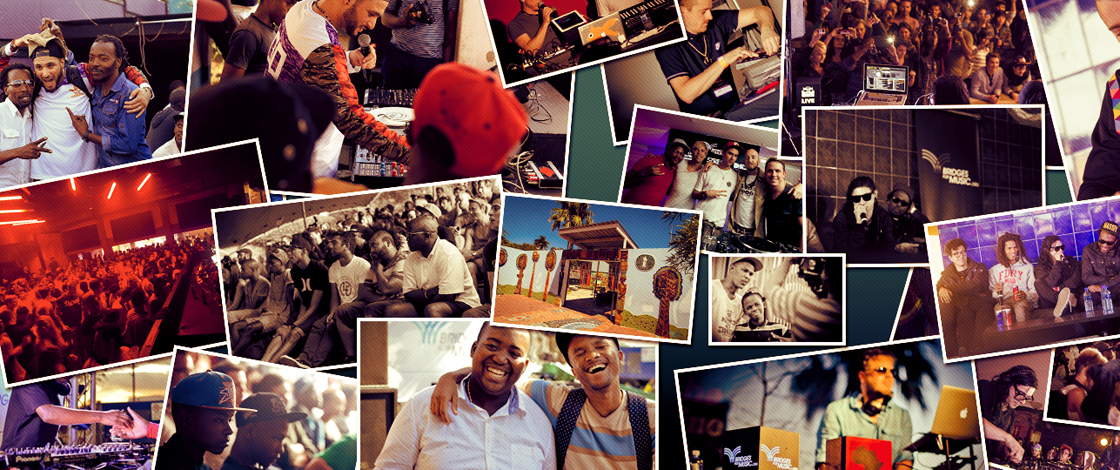
Bridges for Music is a nonprofit organization whose primary goals revolve around the belief that “electronic music is a universal language that can be used to break down socio-economic boundaries.” Founded in 2012 by Valentino Barrioseta, Bridges has since become one of the most dynamic and exciting platforms for not only supporting the development of electronic music artists and culture in developing countries, but also raising awareness about the impact that large-scale festival events often leave for better or worse in their wake.
It’s a long way from his halcyon days as a party promoter and brand manager for Amnesia in Ibiza. But as Valentino tells it, something changed in him as he began to travel to places like Brazil and South Africa and witness their own burgeoning grassroots music scenes.
“I firmly believe in the power of music as a tool for empowering underprivileged communities.”
Once inspiration took hold and the idea for Bridges began to take shape, Valentino linked with Richie Hawtin, who was set to tour South Africa—including headlining the Cape Town Electronic Music Festival in 2013. Between stops on the official tour, Valentino organized a series of free inaugural Bridges for Music workshops featuring Hawtin, as well as a series of pop-up shows in local townships where Hawtin would play alongside popular South African DJ Black Coffee.
In the same year, Valentino noticed that Skrillex was scheduled to tour South Africa as well. So, he reached out to the dubstep star and arranged for him to not only host a workshop but to play back-to-back with well-known South African artists Thibo Tazz and DJ Fosta.
From there, things continued to take off as names like Luciano, Boys Noize, Dixon and Noisia have all come to South Africa to support Bridge, while Valentino continues the tireless job of raising funds and presenting the ongoing successes and goals of the organization at events as varied as ADE, Sónar and TEDx Black Rock City.
While Valentino has played an instrumental role in bringing South African artists to festivals like Glastonbury and Tomorrowland, it is the proposed plans for a music school in the township of Langa, South Africa, that really seems to be driving him. In addition to being a permanent space to host workshops and volunteers from around the world interested in supporting the cause, Valentino hopes the school will serve as a creative hub where local and international artists can interact and inspire each other. It is a model that Valentino has already begun to envision in other countries, most notably Kenya, Angola, Zimbabwe and Brazil.
With such huge dreams and an already impressive track record, Valentino told us more about the organization and their plans to use the power of electronic music to connect fans and artists all over the world.
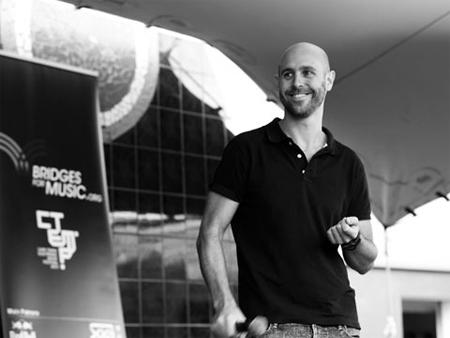
Break down the title for us: “Bridges for Music.” How do you see it representing the philosophy and mission of the project?
The name originally came from the idea to connect the developed to the undeveloped world—specifically, connecting the music industry and all the people who have resources with people who don’t necessarily have access to those same resources. It was also a way for the industry to give back and to create a network of responsible companies that want to make a change in the world. That’s originally what Bridges was about. The bridges are not only from here to there; bridges go two ways. We also want to bring real opportunities for creative minds in underdeveloped territories to travel abroad and to be able earn a living through their arts.
How did you go from managing Amnesia in Ibiza to running workshops in small townships in South Africa?
Ultimately my life as a promoter became unfulfilling, and I wanted to do something with my life that had a bigger purpose. Of course, I really enjoyed bringing new acts to the city, bringing my friends together, and setting up a record label and pushing new music; that was what my real passion was, but then you also grow as a person.
I started traveling a lot to places—like South Africa, Brazil and Kenya—and it affects you. You realize some things, and your values shift; you see the other side of the world, the other side of the coin, and you start thinking more about how you could make a change, make a difference. This is not to say that I think I’m going to change the world—nor the organization, that’s for sure—but I think if everyone would have that mindset, we could definitely make the world a better place.
How do you deal with communities that may be hesitant to embrace electronic music culture due to the way it is often negatively portrayed in the media?
Electronic music is suffering from bad press in many ways; I’ve been dealing with it from the very beginning. But when you get to a township in South Africa, and you see the kids playing local house music and being really inspired and driven; when you see parties where white tourists are starting to go into communities they never would have before, just because of these parties; that shows you the real power of music and the positive value of music in a very tangible way. That’s something we often forget when we are in Ibiza or New York or any of these places where it can seem, especially to those outside the culture, that it’s only about showing off, spending a lot on bottle service and getting wasted.
But when you go to a workshop and you see how artists like Skrillex or Richie Hawtin are inspiring the kids, that’s a very positive effect and one we want to continue to promote. The issue of globalization is a really big concern right now, as festivals like EDC or Ultra or Tomorrowland are expanding to new territories like Brazil and South Africa. I don’t think any of us want to see the electronic music industry end up like the coffee industry, you know, where you end up seeing Starbucks all over the place, and all the small coffee shops that were locally owned disappear.

So, part of what we are trying to do is to raise awareness, especially with large-scale international festivals that go to new territories and bring international acts, and they’re an international brand but often don’t do anything for the local scene. We start by asking, what is the legacy that we can leave behind? Apart from promoting tourism and bringing money to the local economy, which both have value, what else can we do to generate awareness and get fans to support causes that we all believe in?
“The party was off the hook, you know—amazing energy, but without that over-admiration for the DJ. Instead, there was this admiration for the music and the vibe; this was the real shit.”
Why music and not, say, clean water or some other cause?
The easy answer is that’s where I worked; that’s where I had my connections. But I also firmly believe in the power of music as a tool for empowering underprivileged communities. With that said, even though one of our goals right now is to build a music school in South Africa, it’s not only about the music. Yes, music is the magnet and the core of it—especially when we’re talking about youth—but it’s way more than just music. The goal is not to just produce DJs and producers; the goal is to teach them business skills, life skills in general. Those are the kinds of things we can teach the kids, because they will want to go to school. Yes, we will attract kids who want to work with Skrillex, but then we will be able to translate that into other skills.

How did you end up in South Africa to begin with?
To be honest, I went to South Africa for kite surfing. I love kite surfing. I didn’t go there with any expectations or anything. My ex-girlfriend was studying Responsible Tourism at the time, and I went into a township with her. She was studying how tourism was affecting the townships and how tour operators were operating locally. The first thing I heard was house music coming out of a shack. I popped in to see where it was coming from, and it was some kid listening to it on crappy speakers. I just asked him, “Where did you get this music from?” He said a friend of his had given it to him.
So I went to meet that guy, and one thing led to another, and I started meeting all these bedroom studio producers—more like shack studio producers—and went to a party, and the party was off the hook, you know—amazing energy, but without that over-admiration for the DJ that I had been used to seeing. Instead, there was this admiration for the music and the vibe, and almost immediately, I thought of my friends in the music industry who would love to come and play here, as it was so real; this was the real shit.
That was kind of the start of everything. Eventually I sat down with Richie [Hawtin] and talked about setting up a South African tour, and then coming into these smaller local communities to run some workshops and maybe a pop-up show or two. The results were amazing and very inspiring for everyone. Richie said it was one of the most inspiring moments of his life. Everything grew from there.
This seems to be where this idea of Bridges “changing the way brands, artists and festivals engage with their audiences” was formed. What about the related idea of “we take it beyond the party”—where does that fit in?
Here’s what it is: There’s a lot of really good people in this industry, you know? And not just the artists themselves, but those responsible for creating and maintaining the direction of large-scale festivals and tours. Those are the people we want to create a movement with—around their brand, their festival, their fanbase—for change. That can be through running awareness campaigns, nonprofit tours, or just finding creative ways for festivals to make their fans more aware of being socially responsible while also raising extra funding without affecting a festival’s revenue.

A good example of this is the Full Flex Express train tour we did with Skrillex earlier this year in Canada. He came up with the idea of bringing us on tour and partnering with local youth organizations to do kind of the same things we did in South Africa. We targeted one youth organization in each city that the tour stopped on and donated two Pioneer CDJ 2000s and a DJM 900 mixer to each one. We had a demo on how to use the gear, and some of the kids were able to come backstage during a sound check of the show, and that was the whole campaign.

They donated $1 from each ticket sale that went to covering the costs of the donated gear, as well as our fund for the construction of the Langa Music School in South Afrida. We did a cross-campaign where fans could access special merchandise, backstage passes, and even the chance to win a VIP package to any Skrillex show in North America, including flights and accommodations. We ended up raising $25,000! It was amazing. We spent two weeks with those guys, and it was an adventure—an amazing way to discover Canada.
The Langa Music School definitely seems an ideal, tangible manifestation of all that you’re hoping to do with the organization.
Yes, exactly. All the work that’s put into workshops is good and is inspiring and opening people’s eyes, but it’s not always tangible in a way that our stakeholders can touch, and that is going to make a big difference.
What are your biggest challenges moving forward?
Our main goal right now is to make the organization sustainable, and to scale things up, and not only work in South Africa but also in Kenya and other countries. We are a very, very small organization right now, so we need to be able to raise enough funding to be able to make a living off of this. That is one of the biggest challenges of running a nonprofit when you’re in the early stages.
We’re on year three; this is just the beginning. To get enough funding and enough trust from the big players in the industry to allow us to grow things and really scale them up—that’s what we’re facing this year, and hopefully we’ll find a way.
How can those reading this help?
If you are a company, we are willing to work with you; if you’re a fan, you can volunteer and join us in any way you can. A lot of it depends on what skills you have; we are always looking for graphic designers, teachers, managers. There are many ways to get involved.
You seem like someone who never sleeps. So, what’s next?
I’m focused entirely on Bridges for Music. We’re planning the first tour in Kenya in December, and we’re working on the first initiatives in Zimbabwe as well for beginning of 2016. My motivation is to keep changing people’s life and inspiring others to make the same.
Follow Bridges for Music on Facebook | Twitter | YouTube